
Plans for further data centre development in Cape Town have sparked concern among activists, who warn that energy- and water-intensive facilities could place additional pressure on communities already struggling with limited access to basic services.
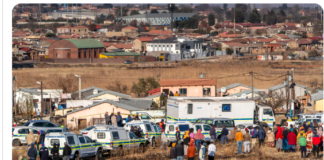
In Barcelona, an informal settlement near land acquired by US-based data centre operator Equinix, residents live in cramped metal homes without piped water or proper sanitation. Many depend on communal taps, with older residents paying children a small amount to collect water for them.
The proposed development has raised questions about whether the expansion of South Africa’s digital infrastructure is taking place at the expense of vulnerable communities.
Housing Assembly (HA), a civil society movement, has joined UK-based non-profit Foxglove and other organisations in challenging the rezoning of land near Barcelona, close to Cape Town International Airport.
Kenneth Matlawe, an HA activist who lived in the settlement for 15 years, said development should benefit local communities rather than deepen existing inequalities.
The appeal was heard this month, with a non-binding recommendation expected within 90 days.
Equinix, which operates around 280 data centres worldwide, said it had no immediate plans to develop the site. Managing director Sandile Dube told AFP that any future project would follow the required procedures and take community concerns into account.
South Africa is attracting growing investment in data centres as demand for artificial intelligence and digital services increases. The country already has more than 60 facilities, making it the continent’s largest data centre market.
However, activists are calling for a pause on new developments until specific regulations are introduced to address their environmental and social impact.
In September, HA and the climate group Extinction Rebellion petitioned Cape Town’s mayor, demanding enforceable standards governing the industry’s expansion.
Legal Resources Centre attorney Saadiyah Kadwa, who represents the groups, said the country needed a clear understanding of the legal requirements for data centre development before allowing the sector to expand rapidly.
The groups have also warned that hyperscale data centres could consume more than 4.4 billion litres of water annually under standard cooling methods, equivalent to the yearly water use of more than 18,000 households.
Water security remains a major concern in Cape Town, which narrowly avoided severe restrictions during the 2018 ‘Day Zero’ crisis. The city could face renewed restrictions as changing weather patterns put pressure on water supplies.
Equinix maintains that its facilities use dry-cooling technology to minimise water consumption and aim to rely on renewable energy sources to reduce pressure on electricity networks.
South Africa’s government says data centres must comply with existing building and environmental legislation, while prioritising their own electricity and water supply. However, critics argue that current laws do not adequately address the specific demands of large-scale facilities.
The promise of job creation has also come under scrutiny. While Equinix’s facility outside Johannesburg employed about 750 people during construction, only 26 permanent employees remained once it became operational.
University of Cape Town information systems lecturer Pitso Tsibolane has called for a dedicated legal framework requiring developers to disclose projected electricity demand, water consumption, cooling systems, backup power arrangements and cumulative environmental impacts before receiving approval.
As South Africa positions itself as a leading digital hub for Africa, the debate is increasingly focused on how to balance technological investment with basic human needs. Activists argue that clear, enforceable rules are essential to ensure that the benefits of the data centre boom do not come at the cost of water security, reliable electricity and equitable development for communities already facing shortages.