

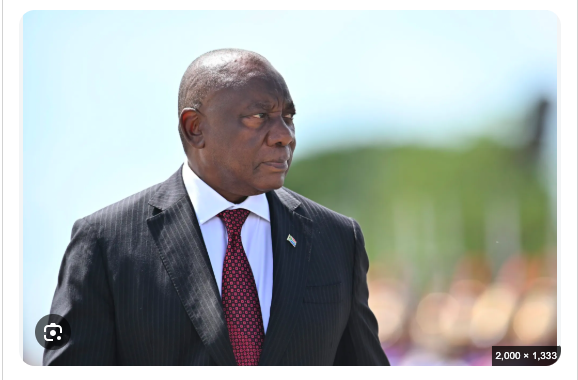
South African President Cyril Ramaphosa has urged the country to prepare for the possibility of losing its preferential access to the US market under the African Growth and Opportunity Act (AGOA), amid growing tensions between Pretoria and Washington.
Although the US Congress has approved an extension of AGOA through the end of 2028, the legislation still requires President Donald Trump’s signature. South Africa, the programme’s largest beneficiary, faces uncertainty over its continued eligibility.
Speaking on Monday, Ramaphosa said the government must prepare for every possible outcome, warning that losing the trade benefits would have a significant economic impact.
“If it ever happens,” he said, South Africa would seek alternative markets to cushion the effects, adding that the country should not view such a development as the end of the world, despite the potentially “devastating” consequences.
🇺🇸 Diplomatic tensions deepen
Relations between the two countries have deteriorated since Trump returned to office. Washington has cut aid, expelled South Africa’s ambassador and imposed visa restrictions targeting individuals it accuses of promoting racial discrimination or enabling land confiscation without compensation.
The US administration has also advanced allegations of discrimination against white Afrikaners, claims rejected by the South African government.
📉 Thousands of jobs at stake
AGOA provides eligible sub-Saharan African countries with duty-free access to the US market for certain products. For South Africa, the benefits are particularly important to its automotive industry, with vehicles among the country’s leading exports to the United States.
Industry group Naamsa estimated in 2025 that approximately 86,000 jobs at vehicle manufacturers were directly linked to the agreement, rising to 125,000 when subcontractors were included.
Ramaphosa said South Africa would explore alternative export markets to limit the damage should Washington withdraw its trade benefits.
The US president reviews AGOA eligibility annually, and removing a country requires 60 days’ notice to Congress and the affected government.