The participation of warships from China, Iran and Russia in military exercises hosted by South Africa risks further straining Pretoria’s already fragile relationship with the US.
According to reports, South Africa has sought to persuade Iran to attend the drills as an observer rather than a full participant — an indication of the diplomatic sensitivities surrounding the exercise, particularly given how it may be viewed by US President Donald Trump.
Naval vessels flying Chinese, Iranian and Russian flags have been seen entering Simon’s Town, South Africa’s main naval base on the Cape Peninsula, ahead of the week-long exercise, which began on Friday. The drills are being led by China and involve members of the Brics+ grouping of major developing economies.
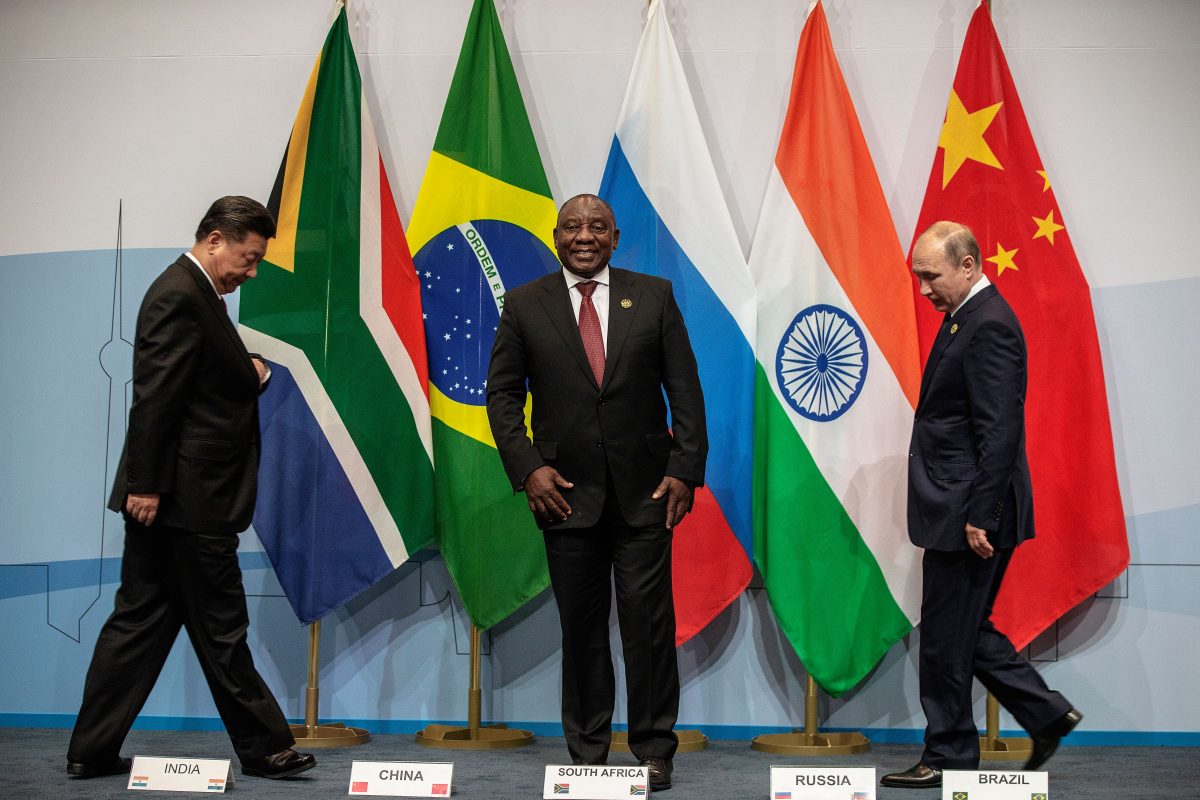
Originally formed in 2006 as Bric — comprising Brazil, Russia, India and China — the bloc added South Africa in 2010. With the recent inclusion of Egypt, Ethiopia, Indonesia, Iran and the United Arab Emirates, it is now known as Brics+, positioning itself as a counterweight to the political and economic dominance of Western nations.
South Africa’s defence department said the navies were gathering for “an intensive programme of joint maritime safety operations, interoperability drills and maritime protection serials”, aimed at safeguarding shipping lanes and maritime economic activity. It did not specify which countries were participating.
However, the decision to hold joint military exercises has raised questions, given that Brics+ is primarily an economic alliance. Defence analyst Dean Wingrin noted that some members of the bloc are politically opposed to one another and, in some cases, have active border disputes.
This is not the first time South Africa has conducted naval drills with China and Russia. The first, dubbed Mosi, took place in 2019 with little controversy. But Mosi II in 2023 drew criticism for coinciding with the first anniversary of Russia’s full-scale invasion of Ukraine.
The current exercise was initially planned for November last year as Mosi III but was postponed due to South Africa hosting the G20 leaders’ summit. It was later renamed “Will for Peace” and expanded to include Brics+ members.
Analysts warn the optics could further alienate the US, one of South Africa’s most important trading partners. Relations deteriorated sharply after Trump accused Pretoria of failing to protect white South Africans, offered Afrikaners refugee status in the US, imposed higher tariffs, and cut aid. Tensions were also fuelled by South Africa’s genocide case against Israel at the International Court of Justice.
Despite diplomatic overtures and President Cyril Ramaphosa’s visit to the White House in May, relations have failed to recover. Trump later boycotted the G20 summit in Johannesburg, repeating claims of violence against white farmers — allegations rejected across South Africa’s political spectrum.
Economists warn the fallout could be costly. The central bank has cautioned that US tariffs could lead to significant job losses, particularly in agriculture and the automotive sector. While China remains an important partner, analysts note that US investment supports far more jobs in South Africa.
Criticism has also come from within South Africa. The Democratic Alliance, the second-largest party in the governing coalition, said the exercise undermines the country’s non-aligned stance. Its defence spokesperson Chris Hattingh argued that training alongside Russia and Iran — both heavily sanctioned and involved in active conflicts — represents a clear political choice.
Others defend the drills on practical grounds. Years of defence budget cuts have weakened South Africa’s naval capabilities, Wingrin said, making joint exercises at home a rare opportunity. Deputy Defence Minister Bantu Holomisa echoed this view, saying training with well-equipped militaries boosts morale and operational readiness.
Still, analysts warn the diplomatic costs may outweigh the military benefits. “It’s not the exercise itself, it’s the optics,” Wingrin said.
Professor William Gumede of the University of the Witwatersrand cautioned that South Africa risks being squeezed amid escalating global rivalries. “If we don’t adopt a more pragmatic foreign policy, South Africa will be the biggest loser,” he said.