

/
RSS Feed
A South African court has dismissed an appeal by the country’s heritage authority seeking to block the sale and export of artefacts linked to anti-apartheid icon Nelson Mandela.
The Supreme Court of Appeal ruled that the South African Heritage Resources Agency (Sahra) had wrongly classified the items as protected national heritage, clearing the way for their potential sale and export.
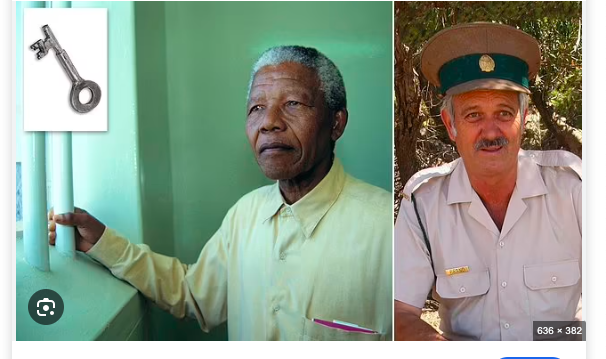
The collection includes about 70 personal objects, among them a cell key from Robben Island where Mandela spent 18 of his 27 years in prison, a pair of aviator sunglasses, one of his trademark floral shirts, a tennis racquet used during his incarceration, and a copy of the 1996 Constitution signed by Mandela.
The items belong to Mandela’s eldest daughter, Makaziwe Mandela, and Christo Brand, a former Robben Island prison warder who later became close to Mandela. They were due to be exported to the United States for auction.
Sahra argued that the artefacts formed part of South Africa’s national heritage and were therefore legally protected from being sold or taken out of the country. The agency said it first became aware of the planned auction after a British newspaper reported in late 2021 that the Robben Island key alone could fetch more than £1 million ($1.35 million).
In its judgment, the court found that Sahra had adopted an overly broad interpretation of the National Heritage Resources Act. It noted that while Makaziwe Mandela and Brand had provided detailed explanations as to why their items did not qualify as protected heritage objects, Sahra failed to clearly justify its position.
Makaziwe Mandela welcomed the ruling, saying the heritage agency had presumed to understand her father’s wishes better than his family.
“Nobody is more invested in ensuring Tata’s legacy endures in the way he would want to be remembered than those who carry his name,” she said, adding that no final decision had yet been made on whether the items would be sold.
She has previously said the proceeds would be used to build a memorial garden at Mandela’s grave in Qunu, in South Africa’s Eastern Cape province.
The ruling has reignited debate in South Africa, with some arguing that objects linked to Mandela should remain in the country for future generations, while others say his family should decide their fate.
It remains unclear whether the government will pursue other legal avenues to stop the sale. Mandela, who became South Africa’s first democratically elected president in 1994, died in 2013 aged 95.