A single flourish of a US president’s pen in Washington continues to reverberate some 13,000km (8,000 miles) away in South Africa, shaping lives long after the ink dried.
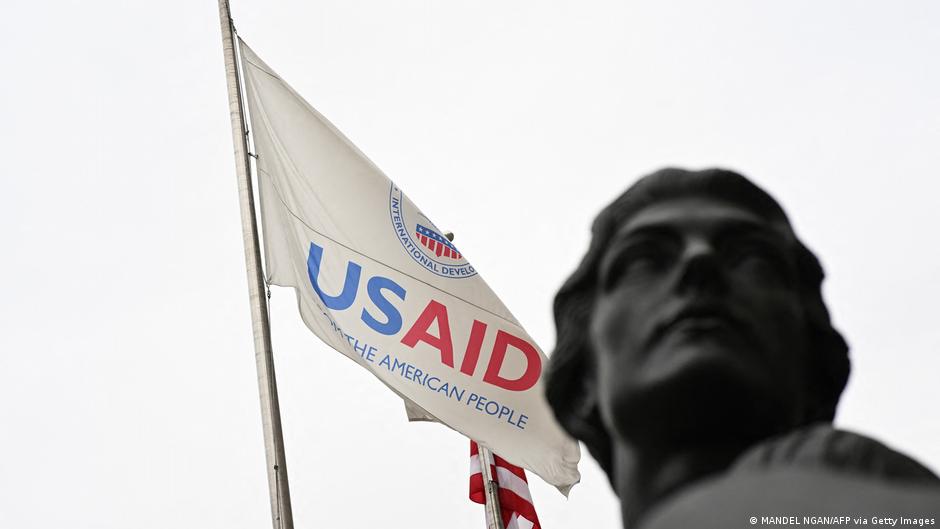
There was a sharp intake of breath across South Africa’s health sector last year when, just hours after his inauguration, President Donald Trump signed an executive order freezing US foreign aid. For South Africa, the decision threatened the loss of an estimated $400m (£295m) a year in US funding for HIV programmes — roughly a fifth of the country’s total HIV budget.
The South African government stepped in with $46m in emergency funding, covering just 11.5% of the shortfall. The US also put in place a temporary “bridge plan” of $115m, which runs until the end of March, replacing regular funding from the US President’s Emergency Plan for AIDS Relief (Pepfar).
Since its launch by President George W Bush in 2003, Pepfar has invested more than $110bn in the global HIV-Aids response, saving an estimated 26 million lives, according to the US State Department. Many of those lives were in South Africa, home to the world’s largest population of people living with HIV — around 13% of the country’s population.
While decades of progress have transformed HIV from a death sentence into a manageable condition, treatment and prevention remain costly. Health experts warn that the sudden withdrawal of funding risks undoing hard-won gains.
“There is no doubt that testing has dropped and that there are gaps in services,” says Prof Linda-Gail Bekker, head and co-founder of the Desmond Tutu Health Foundation and one of the world’s leading HIV researchers. About 40% of her organisation’s funding — roughly $8m — came from the US government.
“This funding supported what I call ‘last-mile’ activities,” she said. “Finding people who have fallen out of care, reaching those who struggle to use public clinics, and providing services in communities that are otherwise missed. The government did mobilise emergency funds, but it was really a drop in the ocean compared with what we lost.”
Among other services, the foundation operates mobile clinics for people unable or unwilling to attend state-run facilities. While some organisations have been forced to shut theirs down, the Tutu Foundation has so far managed to keep its units running.
On a warm summer day in Philippi, one of Cape Town’s most dangerous townships, a small group of women sit beneath a makeshift awning outside one such mobile clinic. A health worker explains different HIV prevention options to those gathered — all determined not to add to South Africa’s HIV statistics.
“I want to take preventative medicine because anything can happen,” says 28-year-old Esethu, who is receiving her second injection of Cabotegravir, known as CAB-LA. The long-acting pre-exposure prophylaxis (PrEP) shot reduces the risk of contracting HIV by nearly 80%.
“You can’t even trust the guys you’re dating,” she says. “Even condoms can fail. With this, I know I’m protected all the time.”
Esethu says she first learned of the US funding cuts on social media and feared the loss of services in her area. “The mobile clinics are important because you don’t have to walk far or spend money on taxis,” she explains. “And for young people, it’s easier to open up here than at government clinics, where the nurses are your mother’s age.”
Nineteen-year-old Okuhle is at the clinic to learn more about Lenacapavir, a twice-yearly injectable prevention drug described by experts as a potential game-changer. She worries that if more mobile clinics close, uptake of preventative medicine among young people will fall.
“That would be a big problem,” she says. “A lot of people don’t like going to public clinics. If prevention stops, the risk of HIV will rise.”
Health Minister Dr Aaron Motsoaledi says the government hopes to announce additional HIV funding in the next national budget and is working with international partners to fill the gap left by the US. Through the Global Fund, South Africa has secured 900,000 doses of Lenacapavir — enough to protect 450,000 people — with rollout expected within months.
But researchers warn this will not be sufficient to halt new infections.
“South Africa has rolled out more oral PrEP than any country in the world,” Prof Bekker says. “Around three million people have been offered daily pills. But young people struggle to take medication every day when they feel healthy. Lenacapavir offers real hope — but we need scale. Millions would need access to avert the infections we’re seeing.”
Last year, South Africa recorded about 180,000 new HIV infections. How many will occur this year is unclear — partly because data collection itself has been disrupted by funding cuts.
“The impact was profound because it was so sudden,” says Prof Helen Rees, executive director of Wits RHI, one of the world’s leading HIV research institutes. “If you stop testing, stop prevention, or fail to sustain treatment, you will inevitably see more cases.”
She adds that the loss of funding has weakened surveillance systems. “Without data, you don’t know where your hotspots are or who you need to reach. We don’t yet know how many people have defaulted on treatment as services were interrupted.”
There is little expectation that US funding will return. “The US has moved on,” Motsoaledi stated. “There is no chance of them going back. They’ve adopted an ‘America First Global Health Strategy’ — one that, frankly, no country that respects itself should accept.”
He was referring to new bilateral health agreements the US has signed with countries including Kenya, Malawi and Nigeria.
Beyond immediate care, the funding cuts also threaten HIV research, an area in which South Africa plays a global leadership role — in part due to decades of US support.
For Prof Bekker, the implications extend far beyond the country’s borders. “I often remind people that to end the epidemic globally, we have to end it in South Africa,” she says.
“If we fail to contain it here, we risk the epidemic continuing for decades — not just for us, but for the world.”